
Arizona Investment PropertyLoans for Rental Properties
Arizona home prices are up roughly 630% since 1980 and only about 18% of the state is privately owned — that's the supply story. This page is the financing story: what each loan type requires, with the government rules linked so you can check every number.

Today's Mortgage Rates
I keep the latest Freddie Mac weekly survey here so you can see where the market sits before we talk numbers. Your actual rate depends on your loan, credit, and closing details — this is the market, not an offer.
What Are the Requirements for a Rental Property Loan in Arizona?
Mortgage explanations and FAQs by Michael George.
If you're comparing investment property loans in Arizona, three numbers decide your deal: the down payment, the rate premium, and the rent that qualifies. Everything else on this page hangs off those three, and I'll link the government rules behind each one so you can check my work.

Let's start with the honest math. A loan on a house you don't live in is a different animal from the one on the house you do. The agencies that set the rules for conventional mortgages, Fannie Mae and Freddie Mac, will finance an investment purchase at up to 85% loan-to-value — 15% down — on a single-family rental, but only 75% LTV — 25% down — on a 2-4 unit building. Those are the floors, not promises: individual lenders stack their own requirements on top, and credit score and reserve expectations run stricter than on your own home.
Rates work the same way — a premium, not a formula. Investment loans carry loan-level pricing add-ons at the agencies, so they cost more than the rate you'd get on your own house. How much more depends on your down payment, credit, and lender. No government agency publishes an official Arizona investment-property rate, so when a website quotes you a tidy statewide range, treat it as marketing and compare actual Loan Estimates instead.
There's a ceiling on how many rentals you can finance conventionally: ten. Both Enterprises cap financed properties at 10 per borrower. Reserves scale with your count — six months of payments on every investment-property loan, plus a percentage of the total mortgage balances you carry on other properties (2% at 1-4 financed, 4% at 5-6, 6% at 7-10). That's the current guide; the old "25% down and six months per property" tier table for properties 5-10 is gone from Fannie Mae's book.
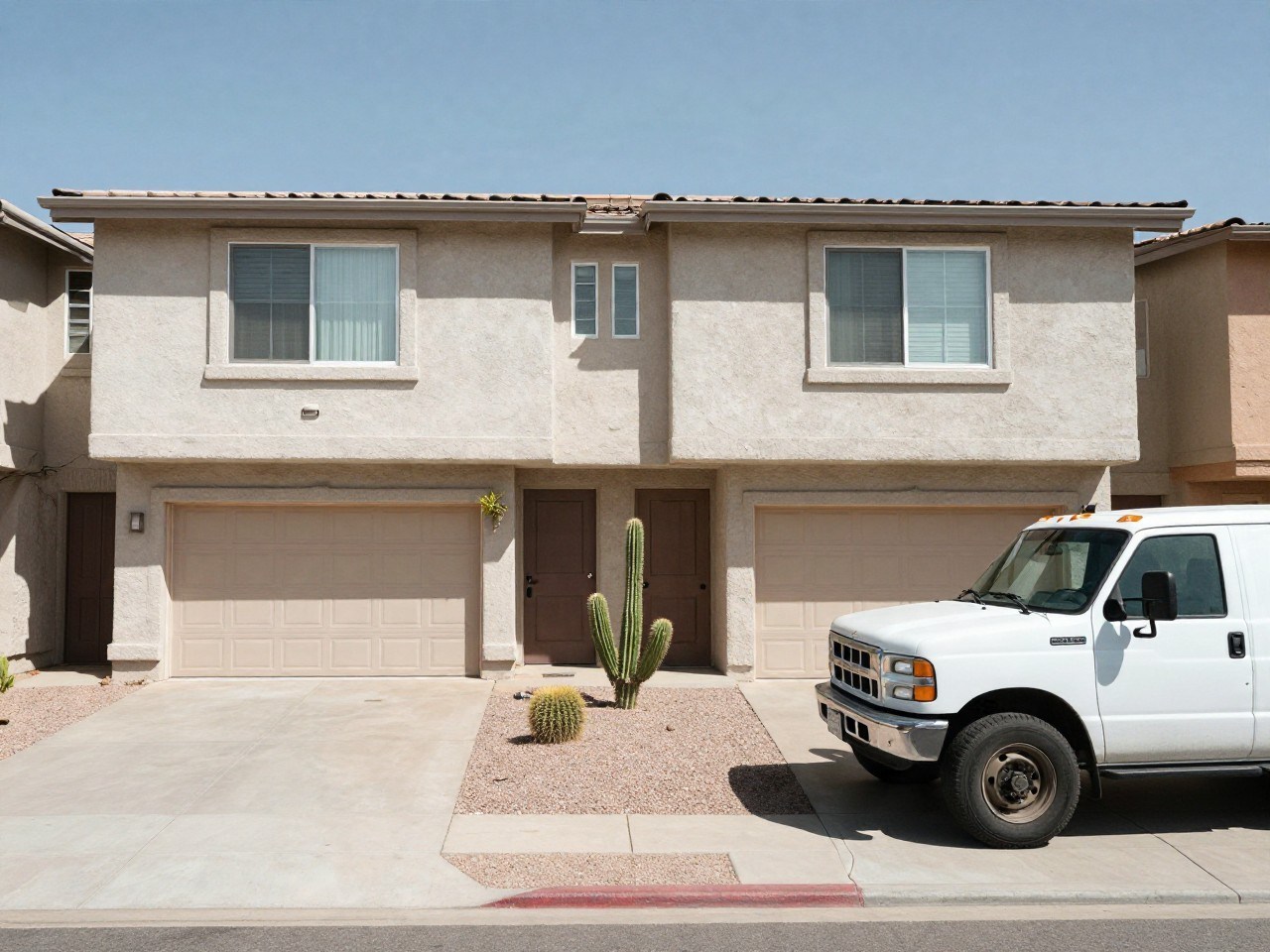
The rent itself can help you qualify. On a conventional purchase, Fannie Mae counts 75% of the property's projected gross rent, then subtracts the full mortgage payment before deciding how much income survives. And there's a door most first-timers miss: house-hacking. Buy a duplex, triplex, or fourplex with FHA (3.5% down) or VA (0% down), live in one unit for at least a year, and your tenants help pay the mortgage the whole time. The rules require you to actually occupy — FHA wants you in within 60 days and intending to stay a year — so it's a real residence, not a loophole.
That's the conventional picture. When investors outgrow it — ten properties, no more personal income they want to document, or an LLC title — the DSCR loan takes over, and it gets its own section just below.
Questions as you read? Call (480) 613-8040 — or keep going; the rest of the guide, and every FAQ answer, cites its source.
Continue reading
Refinancing a rental is its own project. The two paths are a rate-and-term refinance (better rate, same debt) and a cash-out refinance (pull equity out). Lenders cap investment-property cash-out at lower loan-to-value than they allow on a primary home, so the equity you see on paper isn't always the equity you can reach — we price both the refi and a Arizona cash-out refinance side by side so you take the cheaper route.
About titling: a lot of investors want the property in an LLC for liability reasons, and that's a reasonable instinct. The catch is that moving a financed property into an LLC is a transfer, and transfers need lender consent under most loan terms. Some DSCR and portfolio products are built around LLC ownership from day one, which is one reason investors use them. Tell us how you want to hold title before you close and we'll match the loan to the plan.
Where do investors actually buy? Phoenix is the biggest, most liquid market with the most diverse job base. The Southeast Valley — Chandler, Gilbert, Queen Creek — rides the tech corridor. Tucson trades at lower price points with university demand nearby. Flagstaff runs pricier with NAU and vacation-rental appeal, though short-term rental rules are local and they change, so check them before you underwrite a nightly-rate business plan. We'll pull current prices, rents, and taxes for any specific parcel when we quote — the published averages move monthly and vary block by block.
The supply story, with real numbers: the federal government owns about 38.5% of Arizona, tribal nations about 27%, and the state land trust about 13%, leaving roughly 17-18% — 12 to 13 million acres — privately owned. Demand keeps arriving: Maricopa County added about 56,000 residents in 2022, the largest numeric gain of any U.S. county, and the Arizona Commerce Authority reports companies committed more than $31 billion in new investment in fiscal 2025 with roughly 24,000 projected new jobs. Scarcity plus demand is the whole thesis — it doesn't guarantee any single property's return, and anyone quoting you a fixed annual appreciation rate for land is guessing.
Taxes are part of Arizona's pitch. The state's effective property tax rate is about 0.48% on owner-occupied housing value per the Tax Foundation's 2026 data — investment parcels carry their own assessment classification, and rates vary by county and city, so price the actual parcel. Arizona also has no state estate or inheritance tax, which is why investors like holding here for the long run; the federal estate tax can still apply to very large estates, so big portfolios deserve real estate planning advice.
One more practical note for landlords. Arizona has no rent control, and the Residential Landlord and Tenant Act keeps the process moving: for nonpayment, the first statutory step is a five-day notice, and then the matter goes to court. Actual timelines depend on the court's docket, so expect weeks rather than months — fast by national standards, but not a same-month guarantee.
What Is a DSCR Loan and How Does It Work in Arizona?
DSCR stands for Debt Service Coverage Ratio, and the idea is simple: the loan qualifies on the building, not on you. Divide the property's monthly rent by its full monthly payment (principal, interest, taxes, insurance). If the rent covers the payment, the deal underwrites — your personal debt-to-income ratio, your W-2s, even your day job, mostly step out of the way.
That's why Arizona investors who are scaling up use them. Conventional financing stops at ten financed properties and wants your full financial life documented every time; a DSCR loan underwrites the rent instead, which makes the tenth purchase about as much paperwork as the first. Investors buying through an LLC also tend to land here, because these loans are built around entity vesting from the start.
Structures vary: down payments commonly run in the 20-30% range and pricing sits above conventional rates, but those are market patterns, not rules — DSCR is a non-QM product with no government rulebook, and every wholesale lender sets its own coverage thresholds, property caps, and terms. We don't publish DSCR rates or terms on this page for exactly that reason. Ask us what's available through our wholesale lenders and we'll pull the current program sheets that fit your deal.
How Much Down Payment Do You Need for an Investment Property?
The program floors, in one table. Lender overlays sit on top of all of these.
| Loan type | Minimum down | The catch |
|---|---|---|
| Conventional, 1-unit rental | 15% down | Fannie/Freddie maximum financing (85% LTV); lender overlays often add more. |
| Conventional, 2-4 unit | 25% down | The multi-unit floor is 25% at both Enterprises — not 20%. |
| FHA house-hack, 2-4 unit | 3.5% down | Requires owner occupancy: move in within 60 days and intend to stay one year. |
| VA house-hack, 2-4 unit | 0% down | With full entitlement and a price at or below appraised value; owner occupancy required. |
| DSCR / Portfolio / Jumbo | Varies by lender | No GSE or federal rulebook — priced per investor, commonly above conventional floors. |
Sources: Fannie Mae Eligibility Matrix (Aug 2026) for conventional floors; HUD Handbook 4000.1 and VA purchase-loan rules for the owner-occupancy rows; FHFA for the 2026 conforming limit of $832,750.
Which Investment Property Loan Fits Your Deal?
Four doors, honestly labeled — including the ones where the honest answer is "varies by lender."
Conventional Investment
Fannie Mae and Freddie Mac finance investment purchases at up to 85% LTV (15% down) on 1-unit homes and 75% LTV (25% down) on 2-4 units. Individual lenders often require more.
Fannie Mae Eligibility Matrix, Aug 2026DSCR Loans
Qualify on the property’s rental income instead of your personal debt-to-income ratio. A non-QM product with no GSE rulebook — down payments, pricing, and terms are set lender by lender.
Portfolio Loans
Loans the lender keeps on its own books. That is what buys the flexibility — and why terms, down payments, and property limits genuinely vary lender by lender.
Jumbo Investment
For loan amounts above the 2026 conforming limit of $832,750 (FHFA). No government rulebook: each investor sets its own down payment, rate premium, and financed-property cap.
FHFA 2026 conforming loan limitsWhere Do Arizona Investors Buy Rental Properties?
Direction, not stale averages — prices and rents move monthly, so we pull current figures for the actual parcel when we quote.
Phoenix Metro
The largest and most liquid market in the state, with the most diverse job base and the deepest rental demand.
Southeast Valley
Chandler, Gilbert, and Queen Creek ride the tech corridor — the employer expansions driving both jobs and rental demand.
Tucson Metro
Lower price points than Phoenix with university demand and steady employer base — the classic yield-play market.
Flagstaff & Sedona region
NAU demand and vacation-rental appeal at higher prices — and short-term rental rules are set locally, so verify them first.
Why Arizona for Investment Property?
Population keeps arriving
Arizona grew about 12% from 2010 to 2020 (Census), and Maricopa County added roughly 56,000 residents in 2022 — the largest numeric gain of any U.S. county. More people means more renters.
Low property taxes
About 0.48% effective on owner-occupied housing value (Tax Foundation, 2026 data) versus a roughly 1% national norm. Investment parcels are assessed under their own classification and rates vary by county.
Landlord-friendly laws
No rent control, and the state's landlord-tenant act starts nonpayment evictions with a notice that can be as short as five days — the whole process often resolves within weeks, court calendar permitting.
No state inheritance tax
Arizona has no state estate or inheritance tax. The federal estate tax can still apply to very large estates — worth knowing for generational plans.
Arizona Economic Snapshot
Investment Property FAQs
Answers checked against the primary sources on November 17, 2026. Each answer links its strongest authority.
Is Arizona a good place to invest in real estate?
The long-run numbers argue yes, with eyes open. The Federal Reserve’s house price index for Arizona is up roughly 630% since 1980, the state’s population grew about 12% from 2010 to 2020, and only about 18% of Arizona’s land is privately owned, which keeps buildable supply tight. None of that guarantees any individual deal — price, rent, and condition still decide.
Are investment property rates higher than primary residence rates?
Yes. The agencies’ pricing grids charge loan-level add-ons for investment property, so expect to pay meaningfully more than you would on the home you live in. How much more depends on your down payment, credit score, property type, and lender — no government agency publishes an official Arizona investment-property rate, so treat any fixed statewide range with suspicion and compare actual Loan Estimates.
Source: Freddie Mac Primary Mortgage Market Survey (primary-residence benchmark)
Can I use rental income to qualify for the mortgage?
Usually, yes. For a conventional purchase, Fannie Mae’s method uses 75% of the projected gross rent, then subtracts the full mortgage payment (PITIA) before deciding how much income counts. FHA applies a similar 75% haircut test for 3-4 unit properties. DSCR loans go further and qualify you on the property’s coverage ratio instead of your personal income.
What are the best Arizona areas to invest in?
Investors most often look where jobs and population are growing: the Phoenix metro as the largest, most liquid market; the Southeast Valley (Chandler, Gilbert, Queen Creek) around the tech corridor; and Tucson suburbs like Marana and Oro Valley for lower price points and university demand. The right answer depends on your budget and how hands-on you want to be — we’ll pull current numbers for any specific area when we quote.
Source: Arizona Commerce Authority
What property taxes should I expect in Arizona?
Arizona’s effective property tax rate is about 0.48% on owner-occupied housing value per the Tax Foundation’s 2026 data — well below the roughly 1% national norm. Investment properties are assessed under their own classification, and effective rates vary by county, city, and school district, so price the actual parcel rather than averaging the state. As a rough yardstick only: about $1,920 a year on a $400,000 value at that 0.48% rate.
Source: Tax Foundation: Arizona
Can I buy investment property with an FHA or VA loan?
Not directly — both require owner occupancy. The classic workaround is house-hacking: buy a 2-4 unit with FHA (3.5% down) or VA (0% down with full entitlement), live in one unit, and rent the others. FHA’s rule requires at least one borrower to occupy the property within 60 days and intend to stay at least a year, after which moving out and keeping the rental is the accepted path.
What down payment do I need for an investment property in Arizona?
For a conventional loan, the floor is 15% down on a single-family rental and 25% down on a 2-4 unit property — those are Fannie Mae and Freddie Mac maximum-financing levels, and individual lenders commonly require more or price stricter. FHA (3.5% down) and VA (0% down) can buy a 2-4 unit, but only when you live in one unit.
How much of Arizona is actually private land?
Roughly 17-18% — about 12-13 million acres out of 72.7 million total. The federal government holds about 38.5% of the state, tribal nations about 27%, and Arizona’s state land trust about 13%. That scarcity of privately owned, buildable ground is a real part of the state’s long-run housing story.
Source: Arizona State Land Department
How many investment properties can I finance?
Fannie Mae and Freddie Mac each cap financed properties at 10 per borrower. Reserves scale with your count: expect to document six months of payments on every investment-property loan, plus an additional reserve of 2%, 4%, or 6% of the total mortgage balances you carry on other financed properties once you reach 5-6 or 7-10 of them.
Source: Fannie Mae Selling Guide B2-2-03: Multiple Financed Properties
Is Arizona landlord-friendly?
Generally, yes. There is no rent control in Arizona, and the Residential Landlord and Tenant Act sets a fast process: for nonpayment, the first statutory step is a five-day notice, after which the matter goes to court. How long the whole eviction actually takes depends on the court calendar and the tenant’s response, so weeks rather than months is the honest expectation — not a guarantee.
Source: A.R.S. Title 33, Ch. 11 — Arizona Residential Landlord and Tenant Act
Does Arizona have an inheritance tax on investment properties?
No. Arizona has no state-level estate tax or inheritance tax, so heirs receive Arizona property without a second state-level tax bill. One caveat worth knowing: the federal estate tax can still apply to very large estates, so generational planning may need advice beyond the state level.
Source: Tax Foundation: Arizona
Where Can You Research Arizona Investment Property?
Ready to Finance Your Arizona Rental?
Tell us the deal — the property, the rent, and how you want to hold title — and we'll show you conventional, DSCR, and portfolio numbers side by side.